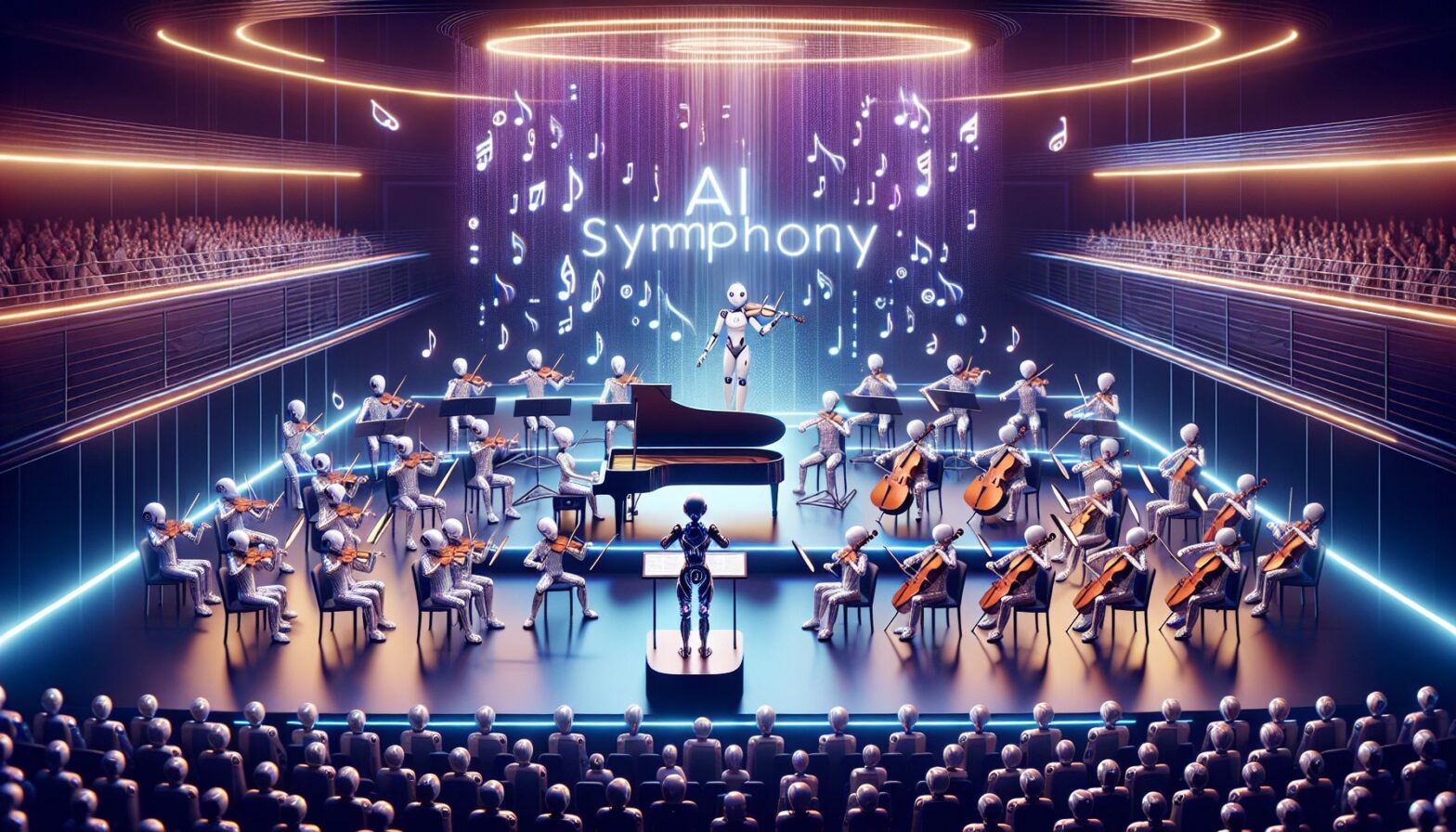
Greetings, fellow tech aficionados! Today, I’m diving into a subject that’s lighting up both the left and right brains of the techosphere—AI in creative arts. I mean, who would’ve thought that one day we’d be chatting about algorithms as part of a creative jam session? But here we are, dancing on the edge of a techno-utopian future where machines not only compute but compose. Grab your virtual coffee and let’s groove through this melodious marvel.
The Rise of the Algorithmic Picasso
Once upon a time, creativity was as human as emotions and coffee addictions. But AI has changed the game completely, giving us a new kind of artist—the algorithm. Take OpenAI’s DALL-E. It’s like a digital canvas that paints from the palette of the internet, conjuring images from textual magic spells like “a futuristic city skyline under an alien sunset.” The results? Astonishingly imaginative visuals that are part Cyberpunk, part Impressionist fantasy.
There’s something wildly exhilarating about witnessing an AI create art that resonates emotionally with us. It’s as if these digital brains have finally found their soul! But how do they do it? Well, algorithms like DALL-E are trained on gigabytes of existing art. They digest the color, form, and composition associated with countless styles, then remix and reimagine. It’s the ultimate upcycling of culture.
Music to Our Algorithms
Music hasn’t missed the party, either. Consider AIVA (Artificial Intelligence Virtual Artist), the AI composer that’s blending beats in the world of sound. From symphonies to soundtracks, AI’s got its groove on. And it’s not just about classical riffs; AI is remixing genres, creating earworms that you wouldn’t mind having stuck on repeat.
Working with an AI composer is like collaborating with an enthusiastic band member who never gets tired and whose inspiration pool is an endless ocean. Sure, they’re occasionally off-key, but aren’t we all after a few rounds of karaoke? The future of music could involve AI collaborators that customize tunes to your mood. Imagine a song that evolves with your emotions, syncing to your bike ride, workout, or heartbreak. Bye-bye breakup mixtapes, we’re in the era of digital serenades.
Paint Brushes, Not Pistons
Visual artists like Mario Klingemann are taking AI art to unprecedented heights. Klingemann, a neural network enthusiast, sculpts his creations with the passion of Michelangelo and the precision of a code ninja. Here, technology isn’t replacing the artist; it’s liberating them to explore new dimensions of creativity.
Imagine a world where your personal AI art assistant can produce personalized wall art that syncs with your living room’s vibe or mood. Suddenly, customizable aesthetics are at everyone’s fingertips, not just those with deep pockets.
Yet, all this sounds too good to be true, right? Like there’s got to be a catch somewhere, which brings us to the inevitable hurdles this path must clear.
Can Machines Really Get Creative?
Before we hand over the Michelangelo Award statue to our digital pals, we’ve got to ask: Can AI truly be creative? Doesn’t creativity involve a certain je ne sais quoi, a dash of human experience and spontaneity? Critics argue that mimicking artistic styles and generating visuals based on data isn’t the same as pure creativity. Creatives worry they might one day find themselves out of a job, replaced by a code-powered apprentice who never needs a coffee break.
The big question remains—do machines merely mimic humanity’s creative output or are they beginning to carve out their own artistic niches? This philosophical question needs addressing, as weaving AI into creativity’s fabric rewrites the old tales of muse-driven inspiration.
What Comes Next?
So, is AI going to take over the art world, leaving humans to trade paintbrushes for programming skills? Not quite. Instead, we’re witnessing a beautiful symbiosis forming between humans and artificial intelligence. Imagine co-creation where AI tools are like extensions of an artist’s vision, offering new angles and insights that just weren’t possible before.
In this world, artists aren’t becoming obsolete; they’re evolving. They’re learning to wield new tools, blending traditional craftsmanship with algorithmic prowess. This doesn’t just redefine what we consider art—it swings open the doors to possibilities as limitless as the internet itself.
And so, as I wind down today’s melodious exploration, I find myself wondering—how long until we pair an AI DJ with a human artist to form the first multi-dimensional techno-band? Whatever the case, I’m strapped in for this creative journey, ready to see what fascinating forms emerge at the intersection of zeros, ones, and endless imagination. Tune in for the next riff of tomorrow, my friends. The future’s got rhythm, and I can’t wait to dance to its beat with you.
Keep jamming with your tech, and we’ll catch up in the next codecast!
Stay curious,
[Your Tech-Savvy Blogger Name]